
.svg)

From Tariffs to Turmoil: The Dollar Sinks


From the moment Trump took office, the U.S. dollar has taken a beating.
First came the tariff announcements, which sent the dollar tumbling.
More recently, both threatened and overt U.S. aggression have added further pressure, increasing volatility and pushing up hedging costs.
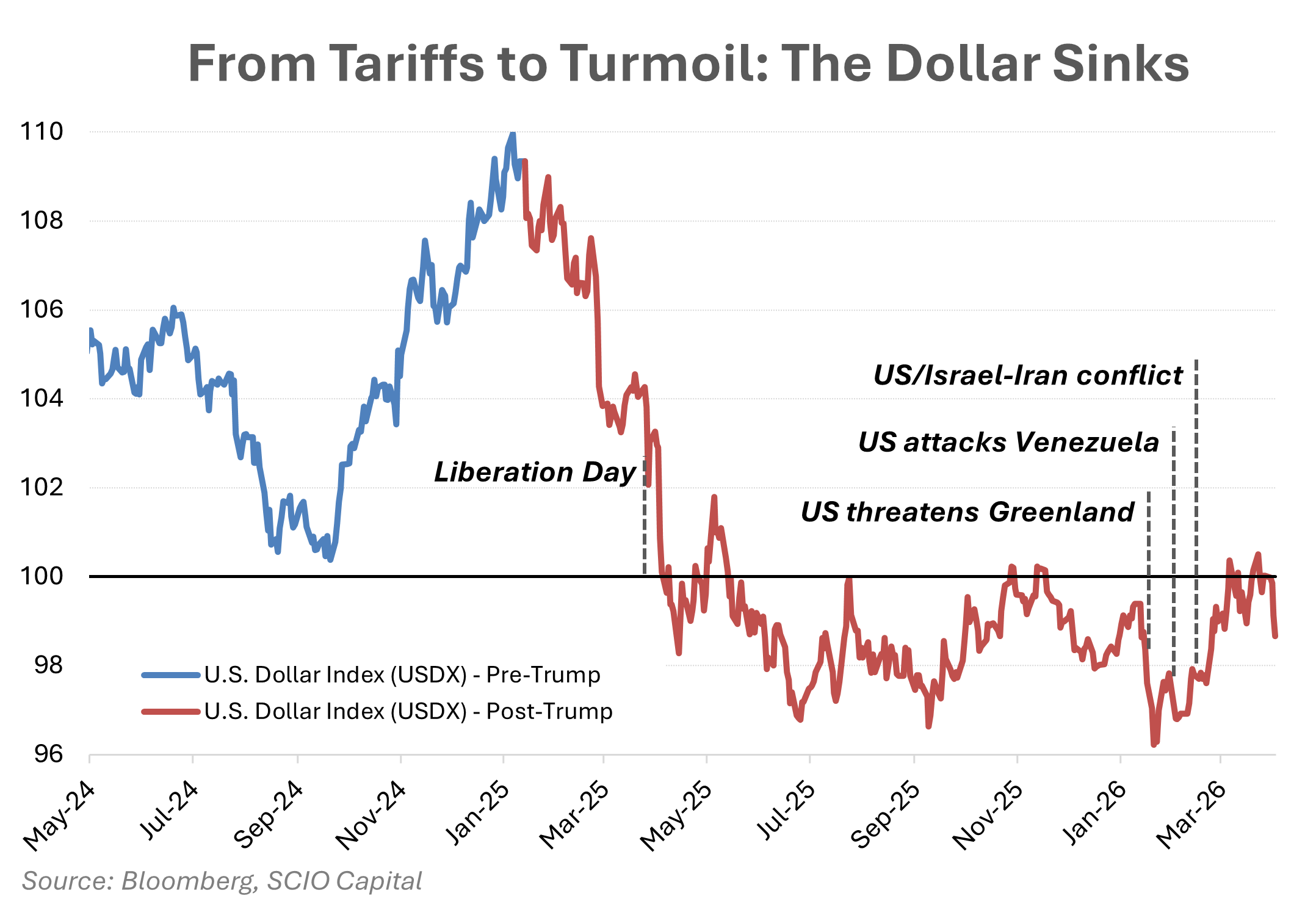
A weaker dollar means less purchasing power for Americans, something anyone who has recently travelled abroad will understand immediately.
More troubling, however, is the inflationary backdrop. The personal consumption expenditures price index — the Fed’s preferred measure of inflation — rose 0.4% in February, after a 0.3% increase in January. A softer currency risks exacerbating the problem by raising the cost of imported goods.
The dollar’s decline, coupled with the continued fall in the share of USD-denominated assets held by foreign central banks as reserves, raises a more profound question: could the dollar’s status as the world’s preferred reserve currency — which has helped keep U.S. borrowing costsr elatively low for decades — be coming under threat?
For now, the decline remains contained, with only a limited impact on American consumers.
However, Trump has been extremely vocal about his desire to push interest rates lower in the months ahead. If he succeeds, the dollar could weaken further as investors seek higher returns elsewhere.
For Americans dreaming of Europe, this may be the moment to book the trip — before a croissant and a coffee in Paris start to feel like luxury purchases.

.png)


.svg)


