
.svg)

Is September's bond sell-off the opening act for a credit correction?


Is September's bond sell-off the opening act for a credit correction?
For the past few quarters, credit spreads have been lounging near all-time tights, seemingly unbothered by a long list of things that ought to bother them: elevated interest rates, swelling sovereign debt burdens, heightened geopolitical risk and rising inflation.
Then came September. Long-bond investors on both sides of the Atlantic came back from their summer holidays and promptly voted with their feet, pushing 10yr government yields sharply higher:
- US Treasury: 53bp, closing at 5.28%
- German Bund: +27bp, closing at 3.59%
- French OAT: +68bp, closing at 4.86%
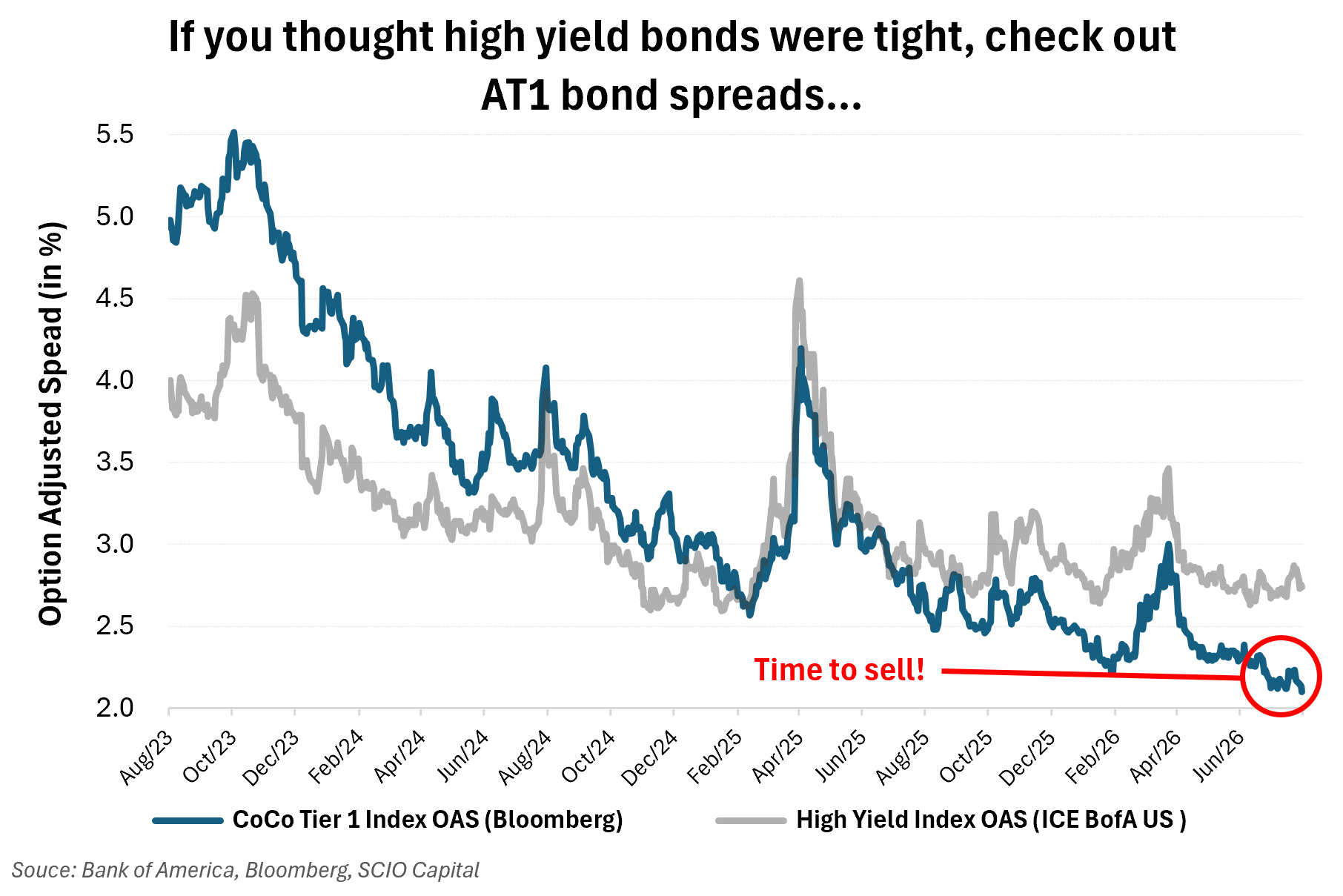
Credit investors took it in stride for the first three weeks of the month, then stirred from their slumber in the final week, driving ICE BofA US High Yield Index spreads wider by 49bp to close September at 3.12%. That's higher, but still well below its c.5.0% average since 2000… plenty of room for further widening.
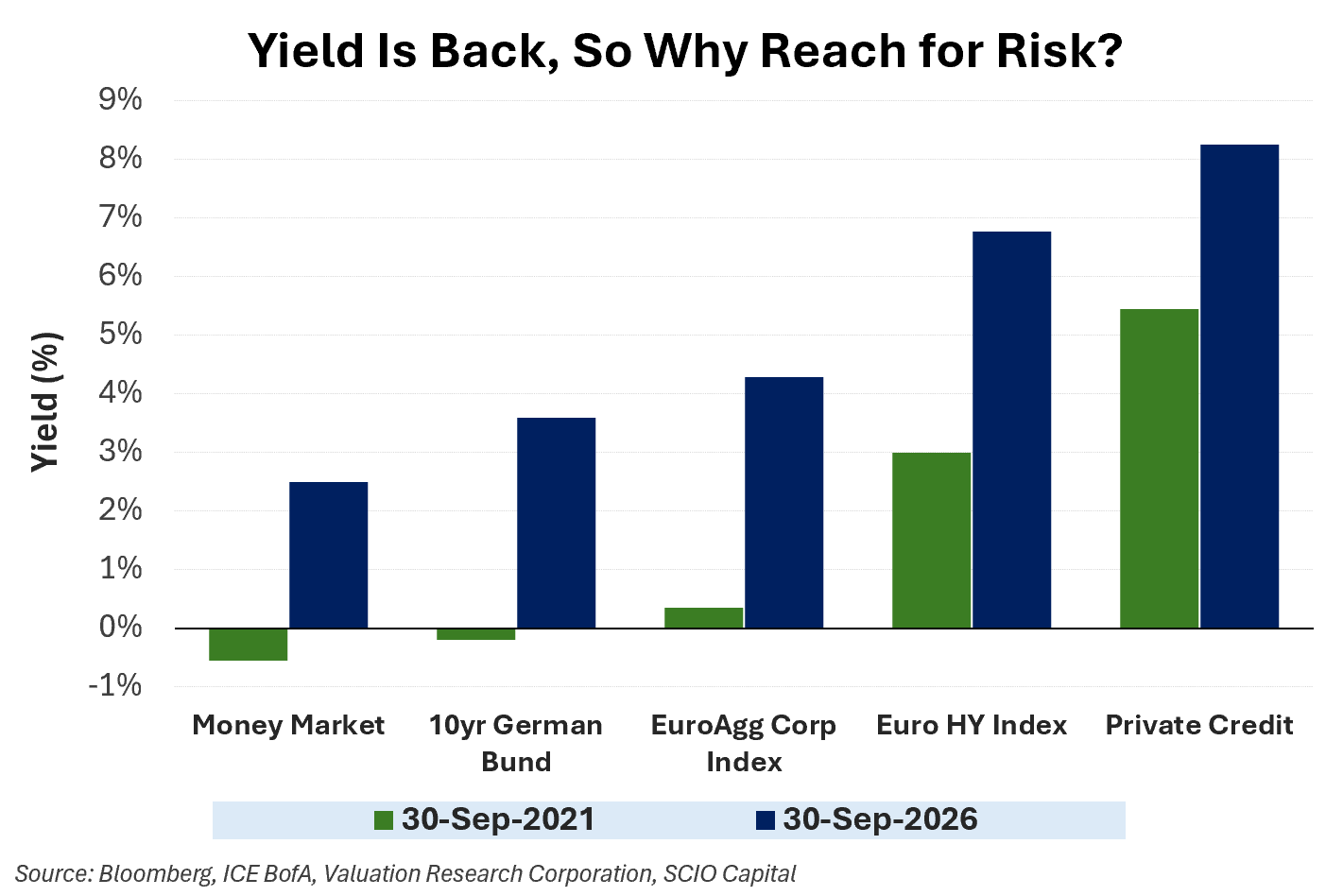
Higher rates plus wider spreads mean higher borrowing costs. That's a real headache for heavily levered corporates, many of which are already wrestling with higher energy bills (S&P Global Ratings expects the European trailing-12-month speculative-grade default rate to rise from 2.6% today to 3.0% by June 2027).
But one person's bane is another's blessing, and what hurts borrowers helps lenders. As the chart above shows, five years ago investors were paying for the privilege of holding cash and Bunds. Today, yields across the fixed-income spectrum are back to something much closer to historical norms.
So what should credit investors do in a richly valued, late-cycle economy? We'd use the higher yields on offer to take some risk off the table:
• Move up the capital stack
• Increase exposure to asset-based strategies
• Overweight countercyclical corporate credit sectors
• Sell low-conviction positions
Is September just one bad month, or the first crack in an expensive market? Only time will tell – but we do think the risk/reward has shifted in favour of caution.

.png)


.svg)


