Table of Contents
4 min read
November 12, 2026

The bill is coming due for non-investment-grade corporates

Greg Branch
Partner and CIO

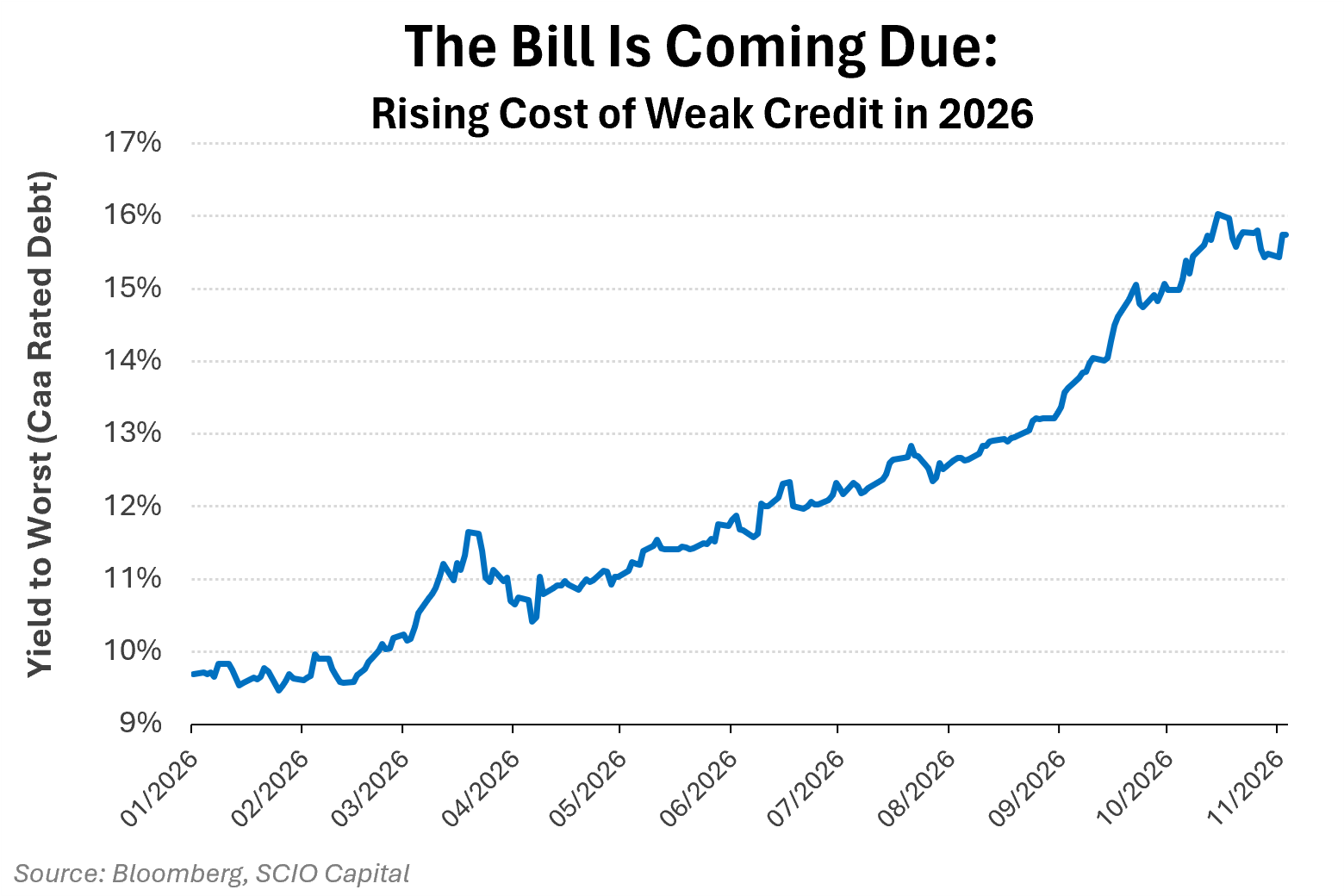
For non-investment-grade borrowers who loaded up on cheap post-pandemic debt, the bill is coming due, and it’s a big one.

‍

US inflation keeps surprising to the upside. The latest annual reading put US CPI at 3.7%, up from 2.4% in February. The recent 0.4% monthly print moved markets, with traders now fully pricing a quarter-point hike in December, and the odds of a half-point move have risen to 13.6%. Before the report they were close to zero.

‍

Rising inflation, falling unemployment, and strong investment demand are keeping the major central banks biased toward further tightening. Elevated geopolitical tensions increase the probability of supply and energy shocks, further underpinning this.

‍

Higher rates mean higher borrowing costs. According to the OECD Global Debt Report, non-investment-grade corporate debt accounts for 31% of total corporate refinancing requirements across 2026–2028. Furthermore, roughly 67% of non-investment-grade debt maturing in this timeframe carries an interest rate of 6% or less.
‍

‍

That’s a lot of balance sheets heading into a much less forgiving rate environment at the same time.

‍

Highly leveraged borrowers have the least room for error.Against this backdrop, we continue to recommend that investors use this window to:

‍

🔹 Move up the capital stack. Seniority and security matter most when margins get squeezed.

🔹 Increase exposure to differentiated sources of income. Diversify beyond traditional corporate credit into strategies whose returns don’t depend on the same refinancing cycle.

🔹 Sell low-conviction positions. If you wouldn’t buy it today, ask why you still own it.

‍

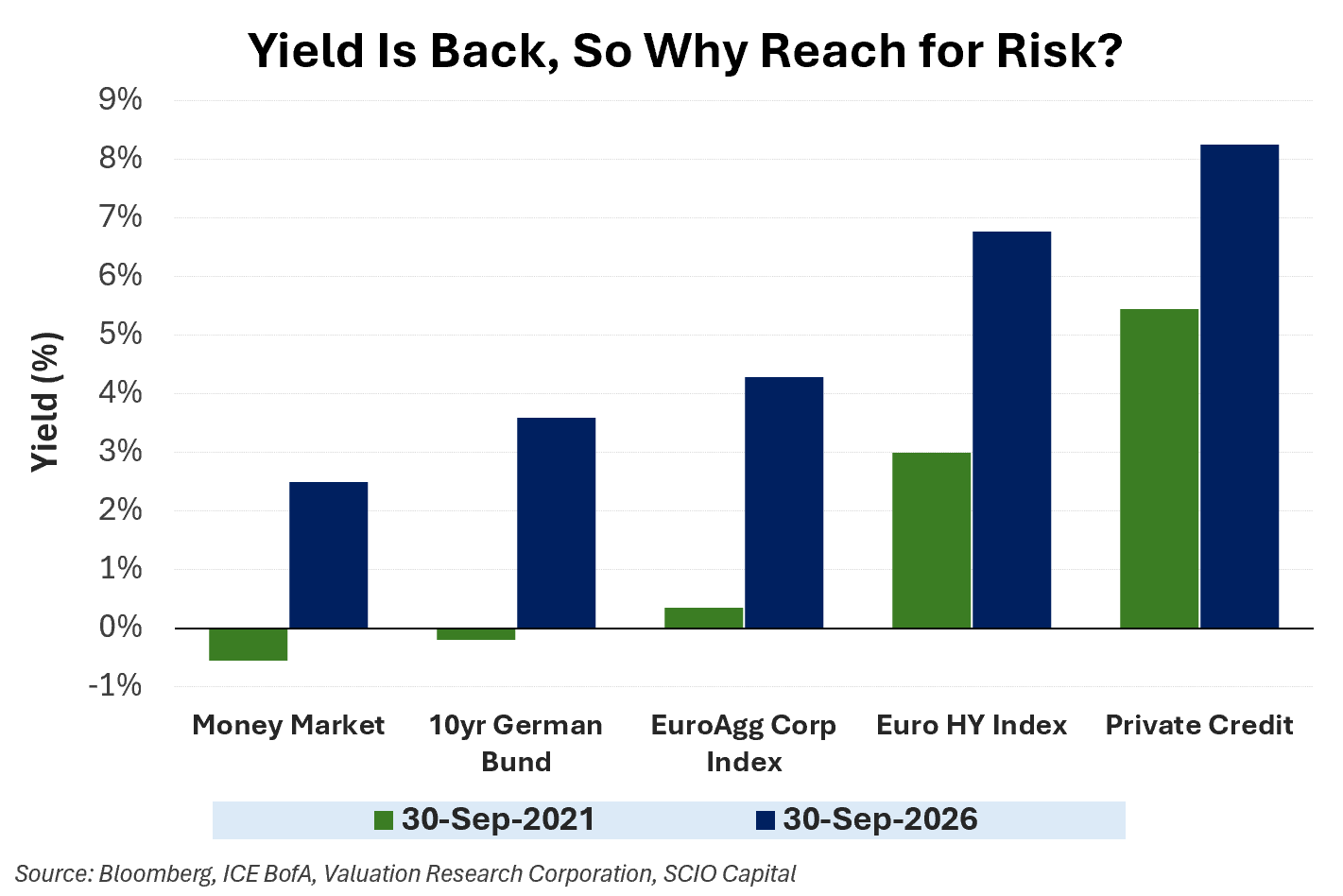
Where rates will settle is anyone's guess. But protecting capital when the cycle turns has never gone out of fashion.How are you positioning portfolios for a “higher for longer” world?

Greg Branch
Partner and CIO

Are You a Prospective Investor?

 Hero Background Image

Related Articles

Back to TOP
Table of Contents
Updated on
January 19, 2024
2 minute read
Greg Branch
Partner and CIO

For non-investment-grade borrowers who loaded up on cheap post-pandemic debt, the bill is coming due, and it’s a big one.

‍

US inflation keeps surprising to the upside. The latest annual reading put US CPI at 3.7%, up from 2.4% in February. The recent 0.4% monthly print moved markets, with traders now fully pricing a quarter-point hike in December, and the odds of a half-point move have risen to 13.6%. Before the report they were close to zero.

‍

Rising inflation, falling unemployment, and strong investment demand are keeping the major central banks biased toward further tightening. Elevated geopolitical tensions increase the probability of supply and energy shocks, further underpinning this.

‍

Higher rates mean higher borrowing costs. According to the OECD Global Debt Report, non-investment-grade corporate debt accounts for 31% of total corporate refinancing requirements across 2026–2028. Furthermore, roughly 67% of non-investment-grade debt maturing in this timeframe carries an interest rate of 6% or less.

‍

‍

That’s a lot of balance sheets heading into a much less forgiving rate environment at the same time.

‍

Highly leveraged borrowers have the least room for error.Against this backdrop, we continue to recommend that investors use this window to:

‍

🔹 Move up the capital stack. Seniority and security matter most when margins get squeezed.

🔹 Increase exposure to differentiated sources of income. Diversify beyond traditional corporate credit into strategies whose returns don’t depend on the same refinancing cycle.

🔹 Sell low-conviction positions. If you wouldn’t buy it today, ask why you still own it.

‍

Where rates will settle is anyone's guess. But protecting capital when the cycle turns has never gone out of fashion.How are you positioning portfolios for a “higher for longer” world?
Are You a Prospective Investor?

Let’s Talk More!
arrowarrow
Back to TOP